



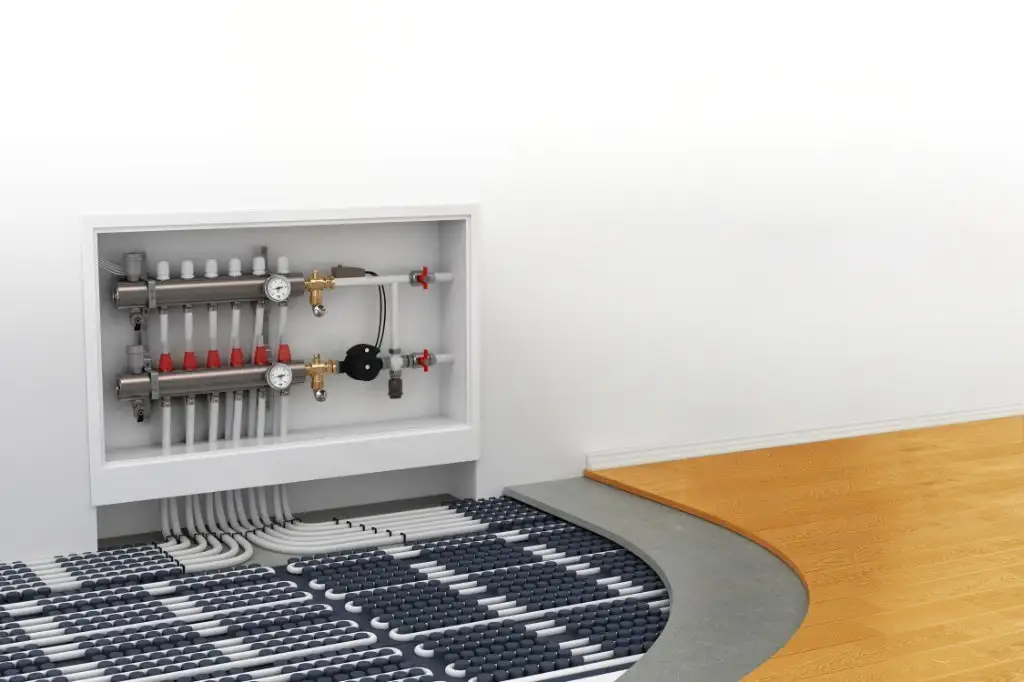
Underfloor Heating Thermostat: What It Is and How It Works
Underfloor heating is one of the most efficient and comfortable heating systems available today. However, to achieve truly optimal performance, having a good thermostat is essential. This device allows you to precisely regulate the temperature, adapting it to each room and time of day, helping you save energy without sacrificing comfort.
In this guide, we explain in detail how an underfloor heating thermostat works, what types exist, how to program it correctly, and the advantages offered by each technology. We’ll also show you the most recommended models from brands such as Honeywell and Siemens, two leaders in the industry. If you already have or are planning to install an underfloor heating and/or cooling system, this article will help you get the most out of it.
What is an underfloor heating thermostat and why is it essential?
Main function of the thermostat
The thermostat is the brain of the underfloor heating system. Its main function is to measure the room temperature and activate or deactivate the heating and/or cooling according to the desired value. This keeps the temperature constant without requiring manual intervention. Some advanced models even learn your habits and anticipate your needs to ensure comfort exactly when you need it.
Differences from other types of thermostats
Although they may look similar, thermostats for underfloor heating are specifically designed for low-temperature systems with higher thermal inertia. This means they regulate heat more gradually and efficiently than conventional thermostats made for radiators or air systems. They also typically include floor sensors to prevent overheating and protect both the installation and the flooring.
Why it’s key for energy efficiency
Having a good thermostat makes the difference between balanced and excessive energy consumption. An underfloor heating system without proper control can overheat rooms, increasing energy use and reducing comfort. Thanks to precise temperature control, thermostats maintain stable conditions, avoid consumption spikes, and reduce your energy bill without compromising thermal comfort.
Types of thermostats compatible with underfloor heating
Analog vs. digital thermostats
Analog thermostats are simple, affordable, and easy to use. They usually have a rotating dial to set the temperature, without time programming. Although they perform the basic function, their control is limited. Digital thermostats, on the other hand, feature displays and menus that allow much more precise management, including daily or weekly programming and different settings according to the time of day.
Programmable thermostats
This type of thermostat lets you set operating schedules for each day of the week. That way, you can lower the temperature at night or when you’re away and increase it right before you return. This function is especially useful in underfloor systems since they have greater thermal inertia and take longer to heat up or cool down. Proper programming can result in significant energy savings.
Smart thermostats (WiFi, App, voice assistants)
Smart thermostats are the most advanced option. They connect to the home’s WiFi network and can be controlled via smartphone, tablet, or even by voice using assistants like Alexa or Google Home. In addition to being fully programmable, many models allow remote control, learn your habits, and automatically adapt operation. They’re ideal for those seeking efficiency, convenience, and complete control from anywhere.
Wired or wireless thermostats
Another key distinction is connection type. Wired models require fixed installation, directly connected to the underfloor system. They’re very stable and don’t rely on batteries. Wireless thermostats communicate via radio frequency with the receiver, allowing flexible placement anywhere in the room without construction work. Some models even combine both options.
How does a thermostat work in an underfloor heating system?
Water temperature regulation
In water-based underfloor heating systems, the thermostat detects when the room temperature falls below the programmed value and signals the valves to open or the boiler or heat pump to activate, regulating the temperature of the fluid circulating through the floor pipes. Once the desired temperature is reached, it stops the supply to maintain stability without wasting energy.
Room and floor sensors
The most advanced thermostats feature dual sensors: one for ambient air temperature and another for floor temperature, which monitors the heat stored in the surface. This is especially useful for wooden, laminate, or delicate flooring, preventing overheating. It also ensures consistent comfort and safety at all times.
Communication with actuators and valves
The thermostat acts as the control center of the entire system. It communicates with electric actuators controlling the valves of each circuit or zone, opening or closing water flow as needed. In zoned installations, each room can have its own thermostat, allowing independent and more efficient comfort management.
Operating modes: comfort, eco, frost protection, etc.
Many thermostats offer various operating modes depending on your needs. Comfort mode maintains a steady, pleasant temperature. Eco mode reduces consumption by lowering the setpoint a few degrees. Frost protection keeps the system above 5 °C during long absences. These modes make it easy to adapt the system to different uses and seasons without complications.
Energy consumption comparison: underfloor heating with and without thermostat
Energy cost differences
An underfloor heating system without a thermostat or with poor control tends to operate longer than necessary, causing excessive energy use that often goes unnoticed. With a properly configured thermostat, the system activates only when needed and stops when the set temperature is reached. This difference can lead to energy savings of between 15% and 30% annually, depending on usage and home type.
Medium and long-term economic benefits
Although installing a programmable or smart thermostat requires an initial investment, the energy savings on utility bills quickly offset the cost. In the medium to long term, the accumulated monthly reduction results in a clear economic return. Additionally, by preventing overheating, it also reduces system wear, extending the lifespan of boilers, heat pumps, and valves.
Impact on home sustainability
Proper temperature regulation not only enhances comfort and reduces costs—it also promotes more responsible energy use. By avoiding unnecessary consumption, you reduce your heating system’s carbon footprint and move toward a more sustainable home model. Smart thermostats even offer statistics and consumption analysis to help users make more conscious decisions.
Tips to improve system efficiency
Ideal thermostat placement
Thermostat placement directly affects its accuracy. It should be installed on an interior wall, between 1.2 m and 1.5 m high, away from heat sources (direct sunlight, appliances, windows) or drafts. Avoid placing it in passageways or near frequently opened doors, as these could alter temperature readings and cause unnecessary activations.
Proper hysteresis configuration
Hysteresis is the temperature margin that allows the thermostat to decide when to switch the system on or off to avoid short cycling. For instance, with a setpoint of 21 °C and hysteresis of 0.5 °C, the system will turn on at 20.5 °C and off at 21.5 °C. Properly adjusting this setting helps reduce the number of cycles, improving efficiency and extending system life. In modern digital thermostats, this parameter is automatically optimized.
System maintenance and inspection
Although underfloor heating is durable and low-maintenance, it’s advisable to check the thermostat regularly, especially if it includes sensors or wireless connections. Also verify the proper operation of valves and actuators, and bleed the hydraulic circuit if air buildup is suspected. A well-maintained system preserves performance and avoids unnecessary energy use.
Integration of the thermostat with smart home systems
Compatibility with smart home platforms
More and more homes are adopting automation, and underfloor heating thermostats are no exception. Many current models are compatible with smart platforms such as Google Home, Amazon Alexa, Apple HomeKit, or KNX systems. This integration allows you to centralize climate control alongside other smart home elements, like lights, blinds, or motion sensors.
Advantages of automated climate control
Automating temperature management offers multiple benefits. You can create personalized scenarios (“night mode”, “vacation mode”, “work mode”) that automatically adjust temperatures based on your habits. It’s even possible to activate the system based on your location (geolocation) or the weather forecast, further optimizing consumption and improving comfort intelligently.
Examples of integrated use scenarios
A practical example: when you leave home, the thermostat automatically lowers the temperature and raises it again half an hour before you return. Or if you open a window, heating pauses temporarily to prevent energy loss. These automations, once complex, are now accessible to any user thanks to WiFi connectivity and intuitive mobile apps.
How to properly program an underfloor heating thermostat
Time intervals and zoning adjustments
Scheduling is one of the most effective tools to optimize underfloor heating use. Ideally, divide the day into time slots that fit your routine: increase the temperature before waking up, lower it while you’re away, and raise it again before returning. If your system is zoned, you can apply different programs for each room based on its use, achieving maximum comfort with minimum consumption.
Recommended winter temperatures
For underfloor heating systems, the ideal winter setpoint temperature is between 19 °C and 21 °C in main rooms. In bedrooms, it can be slightly lower, between 17 °C and 19 °C, to promote better rest. Thanks to even heat distribution, there’s no need to overheat the space to feel comfortable. Each degree less can save up to 8% on your energy bill.
Optimizing energy consumption
Efficient scheduling not only improves comfort but can also significantly reduce energy expenses. Use “eco” or “away” modes when heating isn’t required, and avoid large temperature swings that force the system to work at full capacity. Also remember to anticipate the system’s inertia—since underfloor heating warms and cools slowly, plan temperature changes in advance.
Frequently asked questions, common issues, and solutions
Can any thermostat be installed with underfloor heating?
No. Underfloor heating requires thermostats compatible with low-temperature systems. It’s important that the chosen model can work with valve actuators and preferably includes a floor sensor. Thermostats designed for radiators or air conditioning systems are not suitable for this type of installation.
Is a floor sensor mandatory?
Not mandatory, but highly recommended. The floor sensor prevents the surface from reaching unsafe temperatures, especially with sensitive materials like wood or laminate. It also improves accuracy and efficiency by detecting stored floor heat even when the room air is already warm.
Can it be controlled from a phone or Alexa?
Yes, as long as the thermostat is a smart model with WiFi connectivity and compatible with voice assistants. Brands such as Honeywell and Siemens offer solutions allowing remote control via app, as well as integration with Alexa, Google Home, or Apple HomeKit. This makes adjusting the temperature anytime and anywhere simple and convenient.
The thermostat doesn’t respond or regulate properly
A common issue occurs when the thermostat doesn’t respond or fails to regulate temperature properly. This can result from lost connection (wireless models), incorrect configuration, or sensor failure. Before replacing it, check the batteries or power source, verify communication between the thermostat and receiver, and ensure the setpoint is correctly programmed. For digital models, a reset may also help.
Difference between real and displayed temperature
If the room feels warmer or colder than the thermostat reading, the sensor may be poorly located or affected by heat interference (drafts, sunlight, or nearby electronics). It could also be an internal calibration issue. Some models allow manual sensor calibration to better match real comfort levels.
Resets or freezes in digital models
In digital or smart thermostats, software glitches, random resets, or temporary freezes may occur. These are usually solved by updating the firmware, performing a factory reset, or rebooting through the associated app. If problems persist, consult the manufacturer’s manual or contact official technical support to avoid voiding the warranty.
Expert advice on underfloor heating thermostats
If you have any questions or need personalized help, at www.Todo-Control.com we offer free, no-obligation advice. Our team of experts in climate control and automation is ready to help you find the ideal thermostat for your underfloor heating system and get the most out of it. We work with leading brands such as Honeywell and Siemens, ensuring efficient, reliable, and tailored solutions for every installation.